A key connection milestone in the Bowen Basin
Developer Zero-E Australia, the local arm of Spanish infrastructure group Grupo Cobra (part of VINCI), has secured 5.3.4A Connection Approval from the Australian Energy Market Operator for its 145 MWac Moranbah solar-plus-storage project near Coppabella, Queensland. The site pairs the solar plant with a 50 MWac battery system using an AC-coupled, grid-forming architecture — a configuration built to support grid stability, not just export power. Source: PV Tech.
From development approval to construction-ready
Moranbah was one of 19 projects awarded contracts under Australia's Capacity Investment Scheme Tender 7 in May 2026, a round that delivered 7.8 GW of renewable capacity against a 5 GW target. Connection approval is typically one of the last formal technical milestones before a project moves into procurement and construction contracts, so Moranbah — Grupo Cobra's first Australian clean-energy development — is now approaching the point where structure and equipment orders get placed.
What Bowen Basin conditions mean for the structure
Central Queensland combines cyclone-region wind loading, high UV exposure and a mix of black-soil and rocky terrain across a single site — conditions that call for structure calculations verified to AS/NZS 1170.2 rather than a generic export design. Ground-mount systems for this region need documented wind-load classes and corrosion protection suited to agricultural and mining-adjacent environments, while pile foundations are sized against real geotechnical data rather than assumed soil bearing. Our guide to high-wind mounting design under AS/NZS covers what buyers should require in writing.
Grid-forming hybrids raise the bar on the mechanical side too
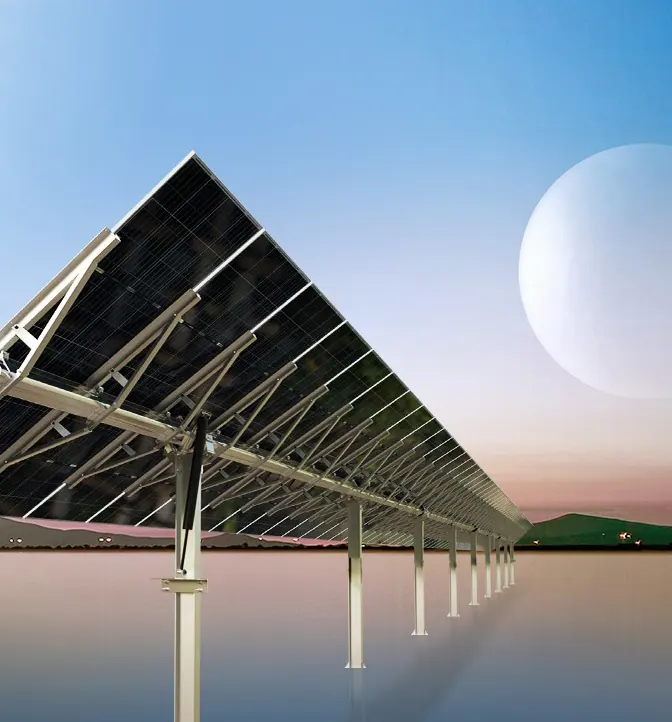
As Australian projects increasingly pair solar with storage and grid-forming inverters, the mechanical structure has to support tighter O&M access and, on tracker sites, precise row alignment for consistent yield. Single-axis trackers suit the Bowen Basin's flat, open terrain and add meaningful annual yield over fixed tilt on hybrid projects designed to firm the grid across the full day.
The takeaway
Moranbah shows how Australia's Capacity Investment Scheme pipeline is converting into construction-ready projects. Developers and EPCs building utility-scale solar-storage hybrids in Queensland can send Apex the site location, geotechnical summary, module format and AS/NZS load basis — the engineering team will prepare a documented tracker or fixed-tilt structure proposal for review.
Prepare your project for Apex review
Send the project location, module datasheet, layout drawing, wind and snow basis, and roof or foundation condition for faster system selection.
Request Project Review