Material choice follows the application, not preference
A recurring buyer question is whether a mounting system should be aluminum or steel. There is no universal answer: the right material depends on the application, the load, the corrosion environment and the project budget. Aluminum and hot-dip galvanized steel each have a natural home, and many complete systems combine both — aluminum rails and clamps with steel foundations. Understanding where each material wins helps a purchasing team compare quotations on a like-for-like basis instead of on headline price alone.
Aluminum: light, corrosion-resistant, roof-friendly
Aluminum alloy — typically AL6005-T5 for structural rails — is light, forms a self-protecting oxide layer against corrosion, and extrudes into precise profiles that speed installation. Those properties make it the usual choice for roof mounting, where low weight protects the roof structure and fast assembly matters, and for the visible rail-and-clamp layer of many systems. Aluminum costs more per kilogram than steel and is less suited to very high point loads, so it is used where its weight and corrosion advantages pay off rather than for heavy foundation members.
Steel: strength and cost for ground and carport
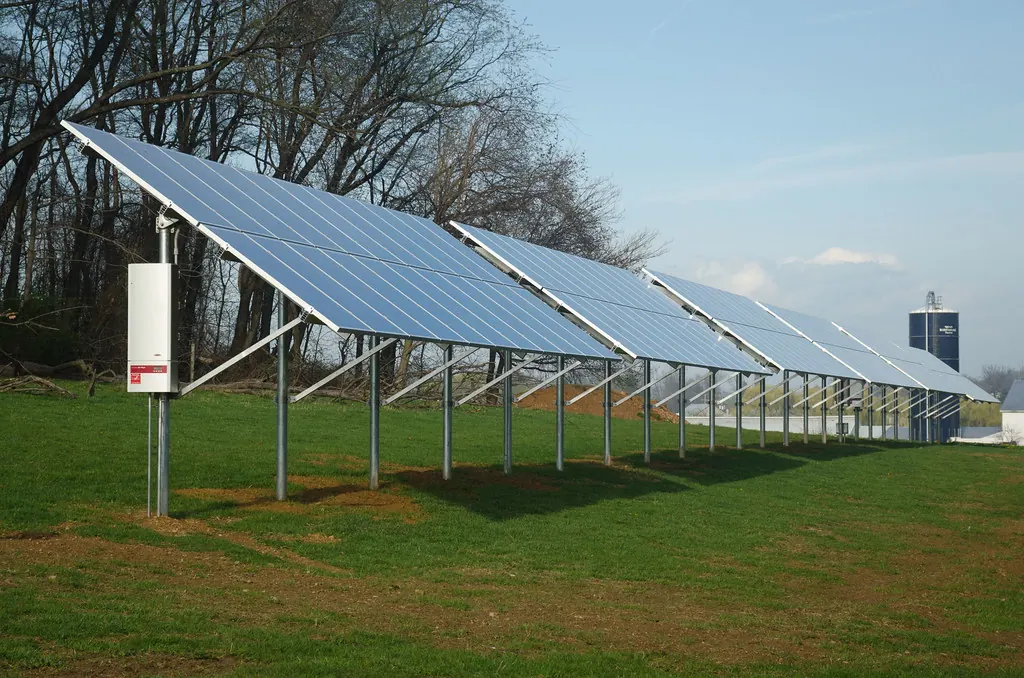
Hot-dip galvanized steel — grades such as Q235B or Q355B — carries more load per unit cost and resists bending, which makes it the workhorse for structures that transfer large forces into the ground. Ground mounting posts, beams and foundations, and carport columns and canopies, are commonly steel for this reason. Its protection depends on the galvanizing rather than the base metal, so coating thickness becomes the key durability parameter. Steel is heavier and needs its cut edges and connections detailed to preserve the coating, but for high-load, ground-level structure it is usually the economical choice.
Corrosion, coating and mixed-metal detailing
Whatever the base material, the corrosion environment sets the specification. Coastal salt, industrial air and agricultural moisture push aluminum toward higher grades and steel toward thicker galvanizing, and stainless fasteners (SUS304 or SUS316) are matched to the exposure. Where aluminum and steel meet, galvanic corrosion has to be managed with the right fasteners and interface accessories so the connection does not become the weak point. Because this is often where service life is won or lost, it is worth reading alongside the corrosion protection guide when the material scope is being fixed.
Inputs to get the material scope right
To recommend the right material mix, Apex needs the application (roof, ground or carport), the module and layout, the local wind and snow basis, and the corrosion environment — coastal distance, industrial or agricultural exposure and any local corrosion category. With these, the aluminum alloy, steel grade, galvanizing thickness and fastener material can be aligned with the project, so the quotation reflects a structure built for the site rather than a generic bill of materials.
Prepare your project for Apex review
Send the project location, module datasheet, layout drawing, wind and snow basis, and roof or foundation condition for faster system selection.
Request Project Review