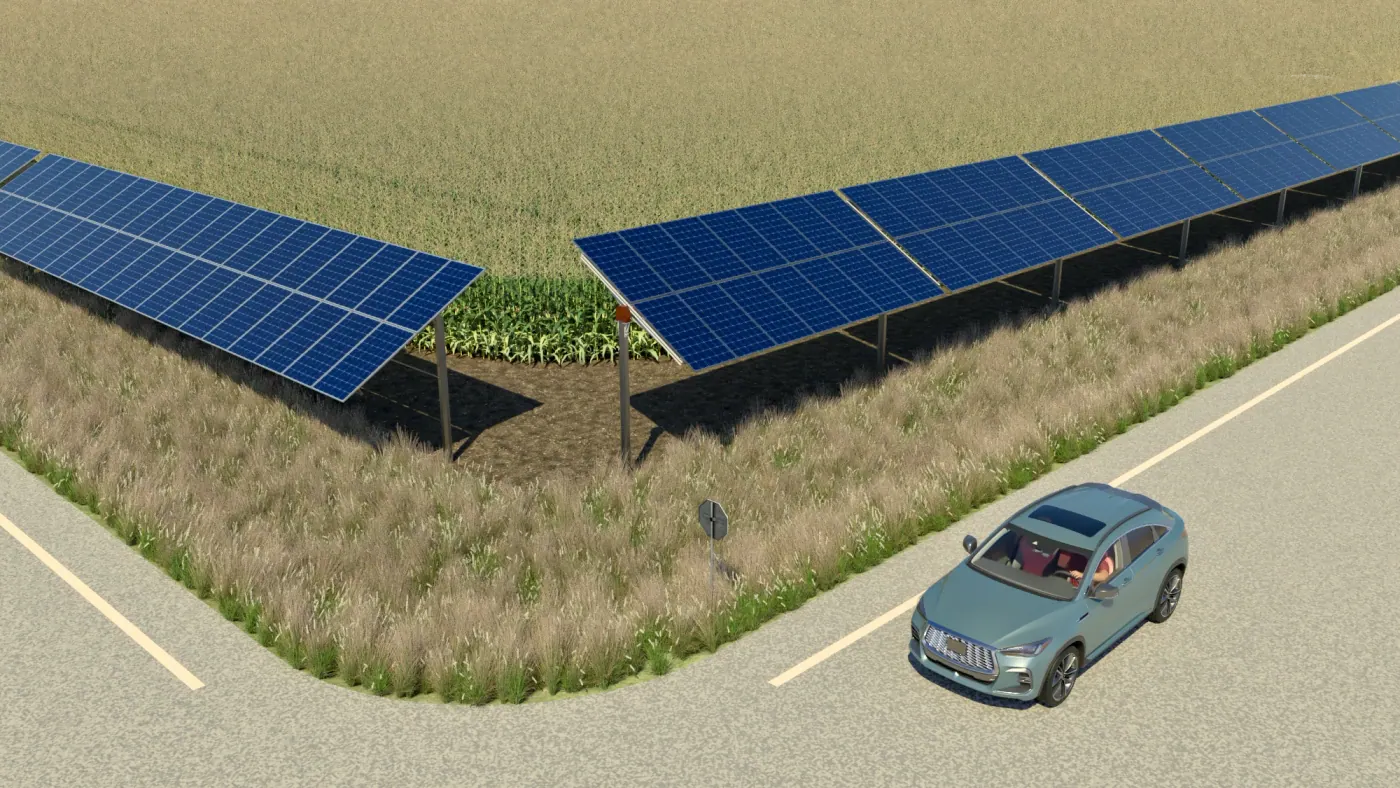
Agrivoltaics shares the land, so the structure leads
Agrivoltaics (AgriPV) keeps a field in agricultural use while generating solar power above or between the crops. Because the land has to stay farmable, the mounting structure — not the panel layout — sets the constraints: the array must leave room for crops, machinery or livestock, and it must manage the light that reaches the ground. This is the opposite of a conventional ground mount that maximises panel density, so an agrivoltaic project should start from the farming requirement and design the structure around it.
High-clearance, spaced-row and vertical layouts
Three structural families dominate AgriPV. High-clearance structures lift the whole array well above head or machine height so equipment and crops pass underneath; a high-clearance ground system is the usual basis for this. Spaced-row layouts widen the gaps between tilted rows so sunlight reaches the crop between them, and a terrace ground system can follow gently sloping farmland. Vertical east-west arrays stand modules upright with wide clear strips between rows, which suits grazing and mechanised cropping. Each option trades generation density against farming access differently.
Machinery clearance, crops and light
The farming plan drives the numbers. Tractor and harvester height and width set the minimum clearance and column spacing; the crop's light needs set how much shading is acceptable and therefore the row gaps and panel density; livestock projects add rubbing, fouling and lower-edge protection considerations. Getting these wrong makes either the farm or the solar plant underperform. A good agrivoltaic brief states the machinery to be used, the crop or livestock, and how much ground light the farmer needs, so the structure can be sized to keep both uses viable.
Foundations and terrain on working farmland
Agrivoltaic foundations sit in active soil, which raises questions a rooftop never faces. Soil type, moisture, frost depth and any irrigation or fertiliser exposure affect the ground foundation choice between driven piles and ground screws, and taller high-clearance structures put more wind load into those foundations. Where the ground disturbance must be minimised or the land later restored, screw foundations are often compared against piles. A geotechnical report remains the basis for a credible foundation scope.
Inputs for an agrivoltaic quotation
To review an AgriPV project realistically, send the crop or land use, the machinery dimensions and required clearance, the target light transmission or row spacing, the site slope and soil data, and the local wind and snow basis. With these, Apex can propose a high-clearance, spaced-row or terrace structure that keeps the field workable while carrying the array, and confirm the foundation and load package before quotation.
Prepare your project for Apex review
Send the project location, module datasheet, layout drawing, wind and snow basis, and roof or foundation condition for faster system selection.
Request Project Review