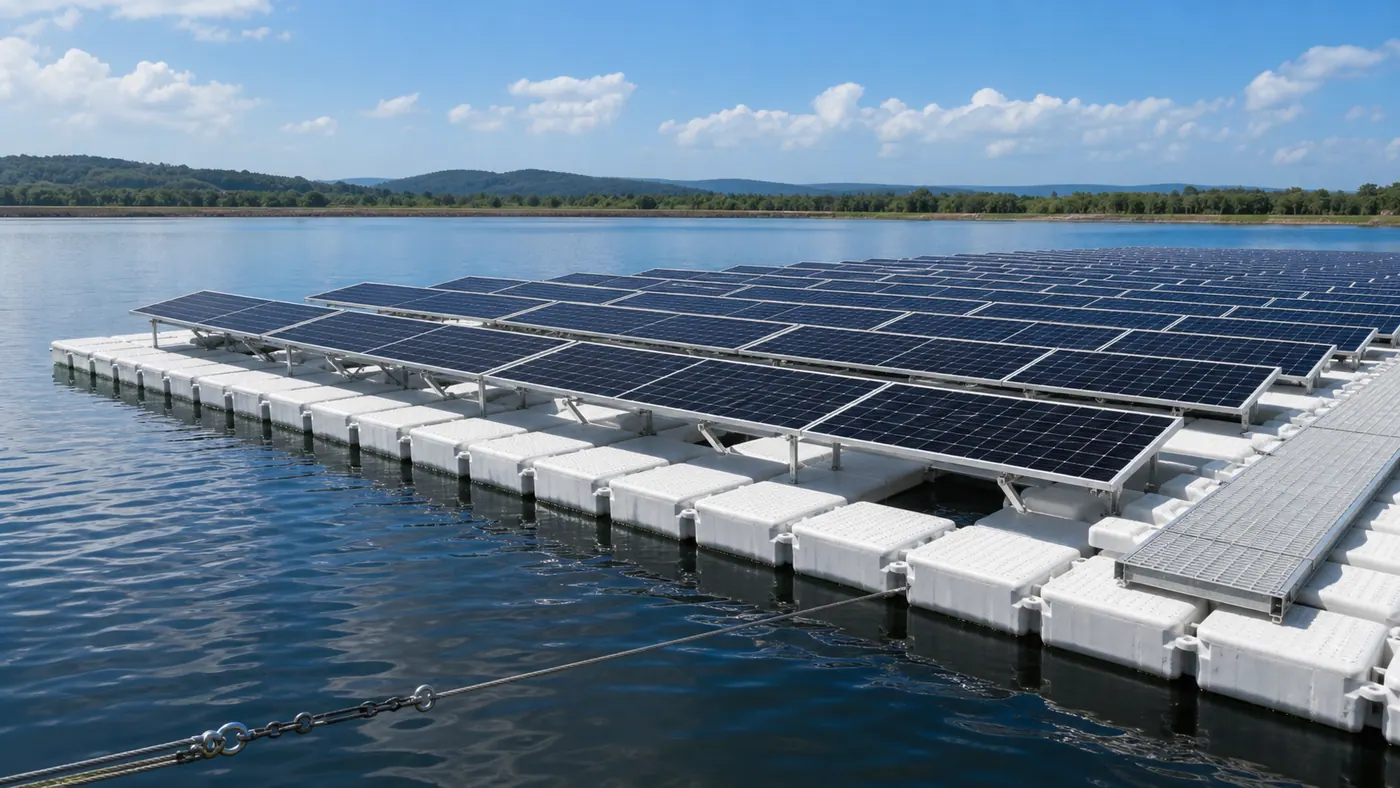
Floating PV starts with the water, not the panels
Floating photovoltaics (FPV) let projects generate power on reservoirs, ponds, lakes and industrial water bodies where land is scarce or expensive. The key shift in thinking is that a floating PV system is reviewed around water behaviour first: float layout, anchoring, water-level variation, wind and wave exposure, and maintenance access. Panel arrangement follows from those constraints rather than driving them.
Float layout and materials
Most modern FPV uses UV-resistant HDPE floats that carry the modules and provide walkways for maintenance. The float layout has to balance packing density with access and with the loads the connection hardware can transfer. Because the array sits on a moving surface, connection detailing and float quality matter more than on a rigid ground mount, so material specification should be confirmed against the water condition and the expected service life.
Anchoring and water-level variation
Anchoring is the defining engineering problem of FPV. The mooring concept must hold the array against wind and current while allowing the whole system to rise and fall as the water level changes — which on a reservoir can be several metres between seasons. Bank anchoring, bottom anchoring or a combination is chosen from bathymetry, shoreline condition and the level range, so these inputs are essential for a credible review.
Maintenance, cabling and environment
Operations planning is part of the design: walkway routes, cable management across a flexing surface, and safe access for cleaning and inspection all shape the layout. Environmental factors such as water chemistry, biological growth and, in some regions, ice also affect material and anchoring choices. A good FPV brief states how the array will be maintained, not just how it will be installed.
Inputs for a floating PV review
To review a floating project realistically, send the water depth, the water-level variation range, the shoreline condition, the wind and wave basis, the module layout and the maintenance access plan. With these, Apex can align the float layout and anchoring concept with the water body and prepare a component and documentation package matched to the site.
Prepare your project for Apex review
Send the project location, module datasheet, layout drawing, wind and snow basis, and roof or foundation condition for faster system selection.
Request Project Review